
Living near Lake Ontario, a creek, pond, ravine, or other body of water can be one of the best parts of owning a home in Burlington. Waterfront and water-adjacent properties often have beautiful views, mature vegetation, and plenty of outdoor space. Unfortunately, these same conditions can also create an ideal environment for insects and the spiders that feed on them.
If you have noticed spider webs repeatedly appearing around your windows, porch, deck, soffits, or exterior lights, your home’s proximity to water may be part of the reason. Spiders themselves are not necessarily attracted to water in the same way mosquitoes and some other insects are. Instead, they are attracted to areas where they can consistently find prey.
Understanding why homes near water have more spiders can help Burlington homeowners reduce spider activity and determine when professional spider control may be worthwhile.
Why Are There So Many Spiders Near Water?
The connection between spiders and water is largely about food. Bodies of water provide breeding and feeding habitats for many types of insects. Mosquitoes, midges, flies, moths, and other small flying insects can become especially abundant around lakes, ponds, wetlands, creeks, and drainage areas during the warmer months. For a spider, an area with a steady supply of insects is an excellent place to build a web.
This is why waterfront homes and properties close to natural areas may experience significantly more spider activity around the exterior of the building. Even when the spiders themselves are not interested in the water, they benefit from the insect populations it supports. In Burlington, the combination of Lake Ontario, creeks, parks, wooded areas, gardens, and residential neighbourhoods provides plenty of environments where insects and spiders can thrive.
Lake Ontario Can Contribute to Insect Activity
Burlington’s location along Lake Ontario means many homes are relatively close to a large body of water. Properties closer to the waterfront can experience noticeable insect activity during spring and summer, particularly when large numbers of small flying insects emerge. These insects may gather around homes at night because of exterior lighting. Once they arrive, spiders have an opportunity to establish webs nearby.
A porch light that attracts insects every evening can essentially become a dependable feeding location for a spider. Over time, homeowners may notice multiple webs surrounding the same light fixture, doorway, window, or porch. Removing a web may provide a temporary improvement, but another spider can eventually occupy the same location if the underlying conditions remain favourable.
Exterior Lights Can Make the Problem Worse
Outdoor lighting is one of the biggest reasons spiders become concentrated around certain parts of a home. Many flying insects are attracted to artificial light after dark. Porch lights, garage lights, landscape lighting, illuminated signs, and lights around decks can all attract insects. Spiders quickly take advantage of this behaviour.
Orb-weaving spiders, for example, often construct large circular webs in areas where flying insects regularly travel. A gap between porch railings, the corner of a covered deck, or the space beside an exterior light can provide an excellent location for a web. Homeowners may therefore notice relatively few spiders during the day but discover several large webs around the house every morning. Homes near water can experience an even greater effect because the surrounding environment may already contain a large population of flying insects.
Why Spiders Build Webs Around Porches and Decks
Porches and decks provide many of the structural features spiders need to anchor their webs. Railings, posts, beams, ceilings, stairs, furniture, and roof overhangs all provide attachment points. These locations are also often sheltered from heavy rain and wind, making them more suitable than exposed areas of the yard.
If a porch light is nearby, the location becomes even more attractive. Spiders may construct webs between railing posts, underneath deck structures, beside exterior lights, around stairs, and in upper corners where the porch meets the house. Covered porches can be especially favourable because the web is protected while still being positioned where insects regularly fly.
Spiders Around Windows and Doors
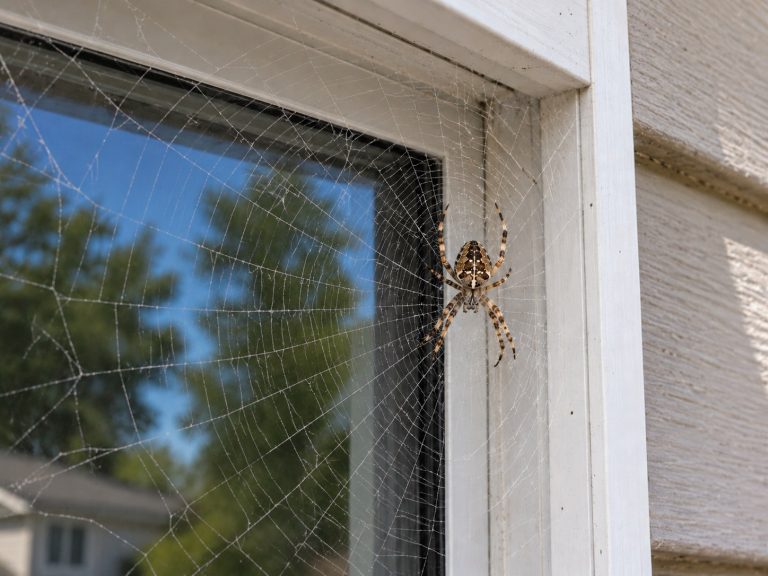
Windows are another common spider hotspot around Burlington homes. At night, indoor lighting can be visible through windows and attract insects toward the glass. Exterior lights installed beside windows and doors can have the same effect. Spiders may begin building webs around window frames, shutters, door frames, and nearby siding because insects frequently travel through these areas.
The small gaps surrounding windows and doors can also provide sheltered hiding places during the day. This can explain why homeowners repeatedly clean webs from the same windows only to see them return a few days later.
Soffits, Eaves and Rooflines Provide Shelter
Spiders do not always build large, obvious webs in open areas. Many species prefer protected cracks and corners around the exterior of a building. Soffits, fascia boards, eaves, roof edges, gutters, and siding transitions can provide excellent shelter.
These parts of a home are often difficult to clean regularly, which allows webs and spider activity to accumulate. Insects may also congregate around the upper portions of a building, particularly when exterior lighting is installed beneath the eaves. Homes surrounded by trees or located near water can experience even greater activity because spiders can move between vegetation and the structure relatively easily.
Vegetation Around Waterfront Homes Can Support Spiders
Water is only one part of the environment that encourages spider activity. Many Burlington properties near the lake, creeks, and ravines also have mature trees, shrubs, gardens, hedges, and other dense vegetation. These areas support numerous insect species and provide spiders with shelter. When bushes or tree branches touch the house, they can also create convenient pathways onto the building.
Dense vegetation beside foundations, decks, and porches can provide protected areas where spiders establish themselves before moving closer to the house. Keeping vegetation maintained will not eliminate spiders completely, but reducing excessive growth directly against the structure can make the exterior less inviting.
Moisture Can Increase the Number of Insects Around a Home
Moist environments support many insects that spiders prey upon. Standing water in clogged gutters, plant saucers, buckets, children’s toys, poorly drained areas, and other containers can contribute to insect activity around a property. Even a home that is not directly on the waterfront can have conditions that imitate some of the same environmental factors.
Properties with shaded gardens, dense vegetation, poor drainage, and consistent moisture may support larger insect populations than dry, exposed properties. More insects ultimately mean more potential food for spiders. Addressing unnecessary moisture around the property can therefore be one component of a broader spider prevention strategy.
Why Spider Webs Keep Coming Back
One of the most frustrating parts of dealing with spiders is how quickly webs can return after cleaning. The problem is that removing a web does not necessarily change the reason the spider selected that location.
Imagine a web located beside a porch light. Every evening, the light attracts dozens of small insects. The spider builds its web there because prey regularly passes through the area.
If the homeowner removes the web but the insect activity continues, the location remains valuable. The original spider or another spider may eventually build a new web in the same place. This is why spider management is often more effective when homeowners look at the entire environment rather than simply removing visible webs.
Are Spiders More Common in Burlington During Summer?
Spider activity around homes generally becomes much more noticeable during the warmer months. Spring brings increasing insect activity, which provides spiders with more feeding opportunities. Through summer, populations continue developing and webs may become more noticeable around decks, porches, windows, sheds, fences, and exterior lights.
By late summer and early fall, some spiders have grown considerably larger, making them much easier to notice. Large orb webs can seemingly appear overnight between porch posts or across walkways. Although the spider may have been present in the area for some time, its size and web become much more obvious later in the season. For Burlington homeowners living near Lake Ontario or other water sources, this seasonal increase can be particularly noticeable.
Can Spiders Get Inside the House?
Most spiders found outside would prefer to remain where food is readily available. However, spiders can occasionally enter homes through small openings. Gaps around doors, damaged screens, cracks around windows, utility penetrations, foundation gaps, and openings around siding can provide potential entry points.
Spiders may also wander indoors while following prey. Basements, garages, crawl spaces, utility rooms, and other quiet areas tend to provide suitable hiding locations once a spider gets inside. Seeing an occasional spider indoors does not always indicate a significant infestation. However, frequent spider sightings can suggest there are plenty of insects available for them to feed on or that there are multiple entry points around the structure.
How Burlington Homeowners Can Reduce Spider Activity
Reducing spider populations starts with making the property less favourable to both spiders and their prey. Regularly removing accessible webs can prevent them from accumulating around porches, windows, doors, and railings. Homeowners can also inspect exterior lights and consider whether unnecessary lighting is attracting insects throughout the night.
Keeping shrubs and tree branches trimmed away from the house can reduce sheltered pathways to the structure. Grass and garden vegetation should also be maintained, particularly around foundations and decks. It is worth inspecting doors and windows for damaged screens or obvious gaps. Weather stripping can deteriorate over time, while small openings around utility lines and exterior fixtures may also allow insects and spiders to enter.
Moisture should be addressed where practical. Gutters should drain properly, and containers that collect rainwater should be emptied regularly. These steps can reduce favourable conditions, although homes near water may continue experiencing spider pressure simply because of their location.
Why Professional Spider Control Can Help
For some Burlington homeowners, routine cleaning and prevention are enough to keep spider activity manageable. Other properties experience persistent webs across multiple areas of the exterior. Professional spider control can be useful when spiders repeatedly establish themselves around the structure.
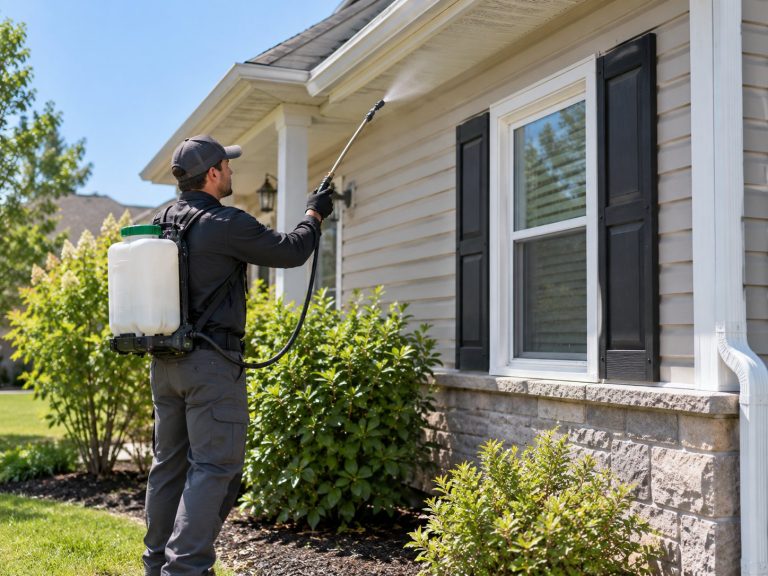
A pest control technician can identify areas where spiders are most active and treat appropriate exterior surfaces and harbourage areas. This is particularly helpful for homes where spiders continually appear around windows, doors, soffits, siding, decks, porches, and other exterior features.
Professional spider treatment can also be valuable for homeowners who are uncomfortable dealing with larger spiders or webs located in difficult-to-reach areas. Because spider populations are closely connected to available prey, reducing other insect activity around the structure can also help make the property less attractive to spiders over time.
Do Homes Near Water Always Have Spider Problems?
Living near water does not guarantee that a house will have a serious spider problem. The amount of activity depends on several factors, including vegetation, exterior lighting, moisture, insect populations, building design, and the number of suitable web-building locations.
Two neighbouring waterfront homes can therefore experience very different levels of spider activity. A brightly lit home surrounded by dense vegetation may attract considerably more insects than a nearby property with limited outdoor lighting and well-maintained landscaping. The important point is that proximity to water can increase the environmental conditions that support insects. Spiders simply follow the food.
Professional Spider Control in Burlington
Spiders are a natural part of the outdoor environment, but that does not mean you need webs covering your porch, windows, railings, and exterior walls all summer. If spiders continue returning around your Burlington home despite regular cleaning and prevention efforts, professional treatment can help reduce activity around the structure.
Burlington Pest provides professional spider control for homes throughout Burlington and surrounding areas. We can treat common spider activity around exterior areas where spiders tend to build webs and hide, helping you enjoy your outdoor spaces with fewer unwanted pests. If you’re noticing persistent spider webs around your porch, deck, windows, soffits, or other areas of your home, contact Burlington Pest today to book a professional spider treatment.